
If you’re evaluating a large vehicle wash system for an RV park, campground, dealership, or multi-service location, you’re making a significant capital investment that will define the guest and customer experience at your facility for years. Getting the selection right matters.
Here’s what to evaluate before you commit.
Vehicle Coverage Range
The first question: what vehicles do you actually need to wash?
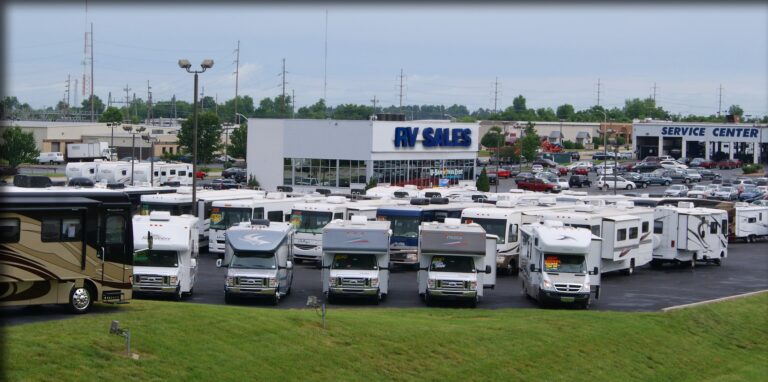
RVs span a wide range of sizes and configurations. Class A motorhomes are the largest at up to 45 feet long and 13+ feet high. Class C and Class B units are smaller but still exceed standard car wash clearances. Fifth-wheel trailers and travel trailers add yet another configuration. If your location serves mixed RV traffic, your wash system needs to accommodate the full spectrum, not just the median.
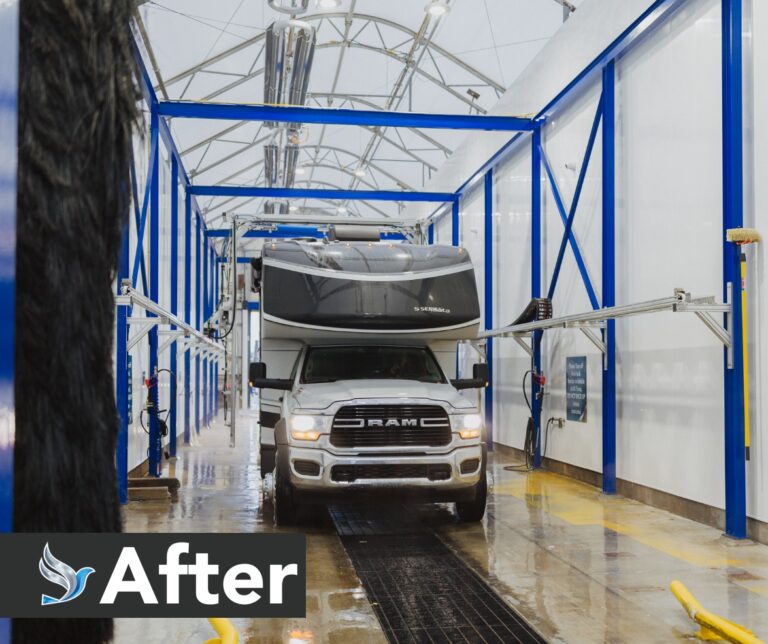
Verify the system’s maximum vehicle height, length, and width clearances against the largest vehicles you expect to see. Systems purpose-built for large vehicles, like the D&S IQ MAX, are designed from the ground up with these dimensions in mind — unlike adapted passenger car systems that may accommodate some larger vehicles but weren’t engineered for them.
Wash Quality and Surface Compatibility
Not all RV surfaces are the same. Fiberglass, painted aluminum, decal graphics, rubber roofs — these materials respond differently to wash chemistry and media. A system that’s aggressive enough to clean a diesel-soaked semi truck may not be appropriate for a high-gloss motorhome with full-length graphics packages.
Look for systems with adjustable chemistry and configurable wash parameters that can be tuned for different vehicle types. Understand the brush or media types used, and verify compatibility with the surfaces common on the vehicles you’ll be washing.
Throughput Capacity
How many vehicles do you need to process per hour or per day? For a high-traffic RV park or campground at peak season, throughput can be a binding constraint. A system that works fine at 5 washes per day may create queues and frustrated customers when demand hits 20 or 30.
Evaluate cycle time (how long each wash takes), vehicle staging requirements (how much space before and after the bay), and how the system handles back-to-back cycles. Purpose-built commercial large vehicle systems are engineered for higher throughput than adapted car wash equipment.
Payment and Access Integration
Modern wash facilities live or die by their payment experience. Cash-only operations create friction and limit data collection. Cashless systems that support credit cards, fleet cards, and stored-value wash cards lower the barrier to purchase and enable loyalty programs.
D&S offers the WashCard Cashless Payment Station, which integrates with their wash systems and supports the payment flexibility that today’s customers expect. If you’re operating in a park environment where guests stay multiple nights, card-based systems can support multi-wash packages or included-wash amenity structures.
Support, Parts, and Reliability
Wash equipment is mechanical — it will require maintenance, and at some point, a component will need replacement or repair. Before committing to a system, understand the manufacturer’s support infrastructure: availability of spare parts, technical support response time, warranty coverage, and dealer network proximity.
D&S maintains a dedicated tech support operation and parts order capability (reachable at 800-844-3442), supporting operators who need to minimize downtime when equipment issues arise. Long lead times on parts or poor technical support can turn a minor mechanical issue into days of lost revenue.
Site Requirements
Automated large vehicle wash systems require meaningful physical infrastructure: utility connections (water, drainage, electrical), a properly sized bay structure, and adequate approach and exit lanes for the largest vehicles you’ll serve. Make sure your site assessment accounts for all of these before you select equipment.
Work with the manufacturer or distributor early in the process to understand site requirements, not after you’ve broken ground.