
Weather drives car wash volume. Every operator knows it. But what’s actually happening to weather patterns across the U.S., and more importantly, what should you expect over the next few years?
Here’s a grounded look at the data — plus what a potential Super El Niño could mean for your bottom line.
The Big Picture on Climate Trends
Climate activists frequently argue that weather is getting worse across the board — pointing to more frequent heat waves, floods, droughts, wildfires, and powerful storms as evidence that greenhouse gas emissions are fundamentally changing everyday conditions.
Whether you agree with that framing or not, there’s meaningful data worth paying attention to as a car wash operator.
According to the National Oceanic and Atmospheric Administration (NOAA), the story isn’t simply that weather is getting “better” or “worse.” The more accurate picture: extreme events are increasing in frequency and severity, even as day-to-day weather patterns remain relatively stable.
Key data points operators should know:
• Temperatures are rising. The average summertime temperature in the U.S. has increased by 2.6 degrees between 1970 and 2024. Winter temperatures have risen even more — up 4 degrees. The EPA projects additional warming of several degrees by 2060, translating to earlier and longer summers, more extreme heat days, and increased health risks.
• Snow is declining. Operators in northern climates are seeing less snowfall than they did in 1970. The EPA tracks a consistent decline of roughly 0.19 percent per year. The direction is clear even if the rate varies by region.
• Intense rainfall is up. Total precipitation hasn’t changed dramatically nationwide, but the number of high-intensity rainfall events has increased by 0.5 percent per decade since 1900. That means more of your annual rain is landing in shorter, harder bursts — not steady, wash-driving drizzle.
• Coastal operators face growing risk. Sea levels have risen 6–8 inches over the past century due to ocean warming and glacial melt. Near-term projections put ongoing increases at 0.75 to 1.5 inches per year. If your car wash, tunnel wash, or automatic wash location sits near a coastline or in a low-elevation area, nuisance flooding and infrastructure disruption are risks worth building into your long-range planning.
• Air quality has improved. On a more positive note, particulate matter (PM) concentrations have dropped 37 percent since 2000, ground-level ozone has declined 30–40 percent, and carbon monoxide concentrations are down more than 80 percent since 1980. Cleaner air means somewhat less surface contamination accumulating on vehicles — though road grime, pollen, and environmental fallout remain consistent drivers of car wash demand.
________________________________________
Enter the Super El Niño: A Near-Term Variable You Shouldn’t Ignore
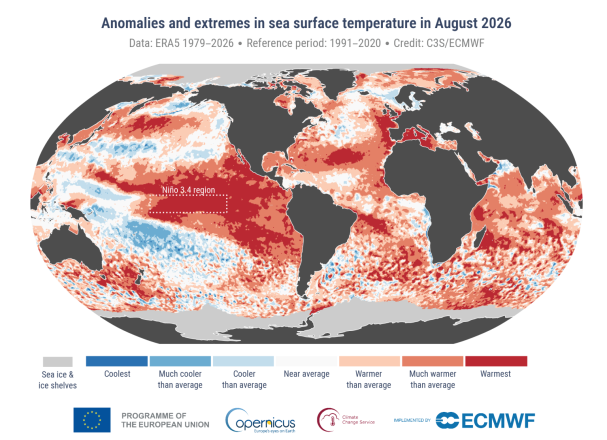
Beyond long-term climate trends, there’s a more immediate wildcard on the horizon: meteorologists are monitoring the potential development of a Super El Niño event.
El Niño is a periodic warming of Pacific Ocean surface temperatures that disrupts normal atmospheric circulation patterns across North America and globally. A “Super” El Niño refers to an event of unusually high intensity — with correspondingly amplified weather effects.
H2 : What does a Super El Niño typically mean for U.S. weather?
• Southern states and the Gulf Coast tend to see significantly above-normal precipitation during El Niño years — wet winters and springs that historically correlate with increased car wash frequency. More road spray, more dirt accumulation, more customers.
• The Pacific Northwest and parts of the Midwest often experience warmer, drier winters — which can suppress the kind of road salt and grime events that drive tunnel wash and automatic wash traffic in colder months.
• The Southeast and parts of the Sun Belt may see increased storm activity and heavier rainfall. High-intensity rain events can temporarily spike car wash demand in their aftermath, but sustained flooding or storm closures can interrupt operations.
• The Northern Tier and Great Lakes region often experiences milder winters with reduced snowfall during El Niño events — accelerating the long-term trend NOAA already documents and cutting into the winter months that typically drive business for self serve car wash and self service car wash equipment operators who rely on road salt traffic.
The bottom line: a Super El Niño is a short-to-medium-term amplifier of the patterns already unfolding. If your region typically benefits from wet conditions, a strong El Niño could be a revenue tailwind. If your market depends on winter precipitation and cold-weather grime, it may compress one of your strongest seasonal windows.
________________________________________
How to Use This Data as a Car Wash Operator
Climate science isn’t a weather forecast — it’s a directional signal. As NASA notes, climate models are probabilistic and ensemble-based, not deterministic. No model will tell you whether next February will be your best month or your worst.
What the data does tell you:
If you operate in a region with declining snowfall, don’t expect dry winters overnight — but do expect the trend to continue. Build your annual revenue model around gradually softening winter peaks, and focus on what you can control: throughput efficiency, chemical performance, and retention of your existing customer base during the months that remain strong.
If your self service car wash equipment or automatic wash is near the coast, sea level rise isn’t an immediate threat to your building — but increased flooding frequency is. Review your drainage, your site elevation, and your business interruption coverage.
If you’re in a region that stands to benefit from a Super El Niño winter, this may be the right season to ensure your equipment is dialed in for capacity. Higher car counts during a wet, mild winter are an opportunity — but only if your tunnel wash or automatic wash can handle the volume reliably.
If your region typically sees colder, snowier winters, a potential Super El Niño is a planning signal to ensure your off-season or shoulder-season revenue streams are well-developed. Memberships, fleet accounts, and detail add-ons can buffer the impact of a compressed winter window.
________________________________________
The Consistent Variable: Cars Still Get Dirty
Regardless of what climate trends or a Super El Niño deliver over the next 12–24 months, one thing doesn’t change: vehicles accumulate contamination constantly. Pollen, road film, UV degradation, biological deposits, and urban particulate don’t take seasons off — even in years with less salt and less snow.
At D&S Car Wash Supply, we’ve been engineering car wash equipment — from in-bay automatic and tunnel wash systems to self serve car wash and large vehicle wash solutions — through more than five decades of weather variability. Climate cycles, El Niño events, regional droughts, and record rainfall seasons have all come and gone. Operators who invest in reliable, high-throughput equipment and build strong customer habits are the ones who weather those cycles profitably.
If you’re evaluating how to position your operation for the next few years — whether that means upgrading your self service car wash equipment, expanding your automatic wash capacity, or looking at what a purpose-built large vehicle solution could add to your revenue mix — we’re here to work through it with you.