
Self-serve car wash operations have a compelling economics story: low labor costs, relatively modest capital requirements, passive income potential, and the ability to scale incrementally by adding bays. But the equipment decisions you make at the beginning define what your operation can realistically earn — and how much it will cost to keep running.
Here’s what investors and operators need to understand about self service car wash equipment, from the core systems required to the details that separate profitable operations from ones that struggle to cover costs.
Core Self-Service Car Wash Equipment for a Profitable Bay Setup
Every self-serve bay requires a set of core systems working together. Cutting corners on any one of them tends to show up in customer experience and repeat business rates.
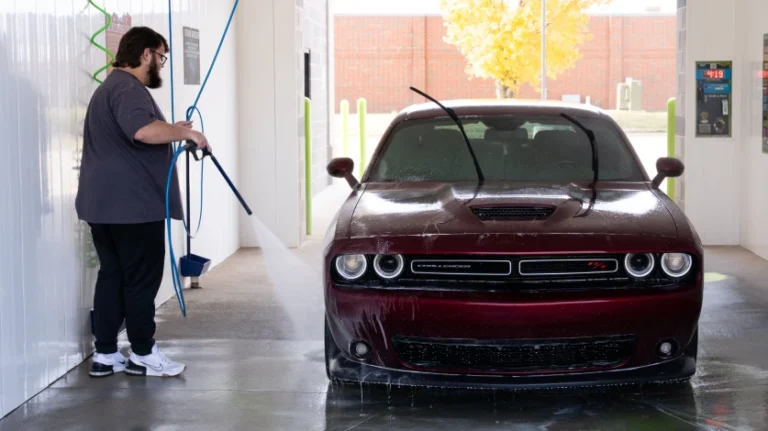
High-pressure wash unit. This is the workhorse of the operation — a pump and motor assembly that delivers the pressure and flow rate needed for effective washing. Pressure ratings, GPM flow, and duty cycle all affect cleaning performance and equipment longevity. Commercial-grade units built for continuous multi-cycle use are essential; residential-grade or light commercial equipment doesn’t hold up under real bay traffic.
Chemical metering and delivery. Self-serve operations typically offer multiple wash functions: per-soak, soap, tire cleaner, foam brush, spot-free rinse. The chemical injection and metering system controls concentration and delivery accuracy for each. Consistent chemistry is what keeps wash quality predictable, which is what keeps customers coming back.
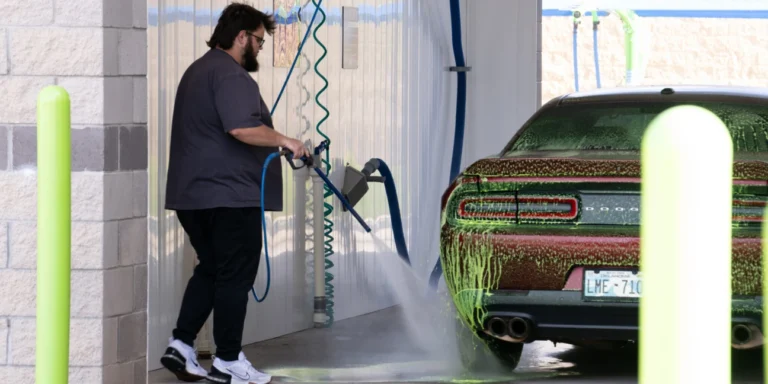
Foam brush system. In a soft-touch self-serve bay, foam brushes allow the customer to apply mechanical cleaning action. The brush system needs to deliver adequate foam coverage, and the brush material needs to be maintained to avoid causing surface scratches. Customers notice the difference between a well-maintained brush system and one that’s been ignored.
Vacuum stations. Interior cleaning capability is a standard customer expectation at a well-operated self-serve location. High-powered vacuums — ideally centralized systems rather than coin-operated standalone units — add to the site’s value proposition and give customers a reason to spend more time and more money.
Coin-Operated Car Wash Equipment: Payment Systems, Controls, and Revenue Logic
The payment system is the revenue engine of a self-serve operation. Modern coin operated car wash equipment has evolved well beyond accepting quarters — and operators who haven’t updated their payment systems are leaving money on the table.
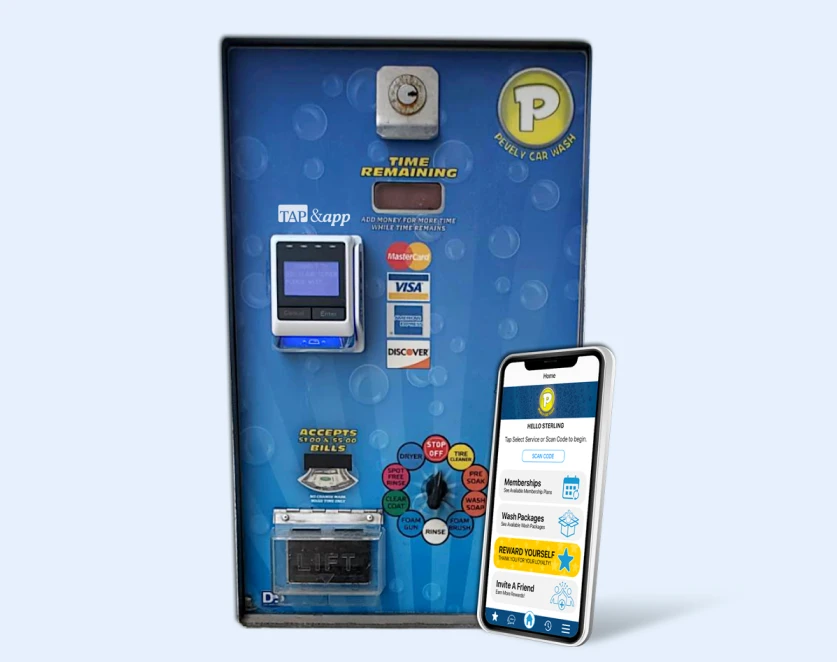
Most competitive self-serve operations now accept credit and debit cards, mobile payment, and app-based or loyalty-based payment in addition to coins and tokens. The shift to cashless isn’t just about customer convenience — it directly increases average transaction value. Customers paying by card consistently spend more per visit than those limited to the coins in their pocket.
WashCard payment and loyalty solutions are designed specifically for this environment, integrating card acceptance with a loyalty program that drives repeat visits. A customer who has loaded credit on a wash card or is working toward a loyalty reward visits more frequently and spends more consistently than a walk-up cash customer.
The control system that manages the timer, chemical selection, and payment processing is also where you have visibility into bay performance. Systems that log transaction counts, up time, and revenue per bay give you the data to manage the operation intelligently rather than guessing at what’s working.
Car Wash Booth Design: Space, Flow, and Customer Experience
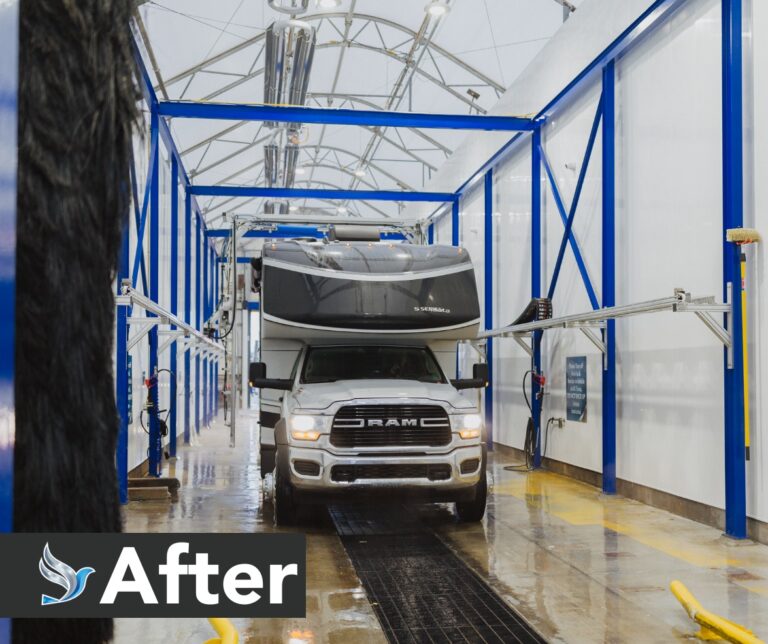
A car wash booth — the physical bay structure — is more than four walls and a roof. Design decisions made at the outset affect throughput, customer ease, and maintenance access throughout the life of the operation.
Bay dimensions. Width and height clearances need to accommodate the range of vehicles your customer base drives. Trucks and SUVs are a significant share of most markets; a booth sized only for passenger cars will frustrate a meaningful percentage of your potential customers and limit revenue.
Drive-in vs. pull-through. Pull-through bays allow customers to exit forward, which improves traffic flow in busy locations. Drive-in bays require reversing out, which slows throughput and can be a source of customer friction. If your site allows it, pull-through is worth the additional land requirement.
Covered vs. open. A covered structure protects equipment from weather and extends component life. It also allows year-round operation in climates where open bays would lose significant winter revenue.
Lighting and signage. Adequate lighting keeps the site usable after dark and contributes to the perception of safety and cleanliness. Clear, simple signage helps first-time customers navigate the operation without confusion — which directly reduces complaints and failed visits.
How Car Wash Washing Machine Performance Affects Repeat Visits and Revenue
Repeat business is the backbone of a profitable self-serve operation. The customer who visits three times per month is far more valuable than the one who visits once and doesn’t come back. What drives repeat visits?
Wash quality. A car wash washing machine that delivers consistent, predictable results earns customer trust. Inconsistent wash quality — chemical performance that varies, pressure that’s intermittent, a rinse that leaves spots — erodes trust quickly and sends customers to competitors.
Equipment reliability and cleanliness. Customers make quick judgments about a self-serve site from the moment they pull in. Equipment that looks well-maintained, bays that are clean, and functions that work every time build the confidence that brings people back. A bay with an out-of-order sign is lost revenue — and a customer who found it out of order may not come back.
Payment experience. A smooth, fast payment process — card-in, go — keeps dwell time low and customer satisfaction high. A balky coin mechanism or a card reader that fails intermittently costs you transactions and reputation.
D&S Car Wash Supply manufactures the IQ Self Wash system and supports self-serve operations with equipment, chemicals, and WashCard payment solutions. If you’re planning a self-serve build-out or evaluating what it takes to make an existing operation more profitable, we’re set up to walk through that conversation from site design to opening day.