
An in-bay automatic (IBA) can be one of the most profitable small-footprint businesses in the car wash industry. It can also be a quiet money pit. The difference usually comes down to location, pricing, and how easy you make it for customers to pay.
What Drives In-Bay Automatic Profit
IBA profit comes from a simple equation: cars washed × average ticket − operating costs. Every lever below moves one side of that equation.
- Traffic and location. Visibility, easy entry, and nearby daily traffic matter more than the machine itself.
- Average ticket. Tiered packages (basic, mid, premium) with add-ons like undercarriage and wax consistently outperform a single price.
- Operating costs. Water, chemicals, electricity, and maintenance are your biggest variable costs. Labor is low, which is the IBA’s big advantage.
- Up time. A bay that’s down earns nothing. Reliable equipment and fast service protect revenue.
Why IBA Margins Can Be Strong
Because an IBA runs with little to no on-site staff, labor costs stay low compared with a tunnel. Many owners operate multiple bays with minimal staffing, and that’s where margins build. Once the equipment is paid down, a well-located IBA can throw off steady cash flow.
Where Owners Leave Money on the Table
- Cash and coin only. Customers carry less cash every year. If your pay station doesn’t take tap, card, and mobile payments, you’re turning away sales.
- Flat pricing. One price for one wash caps your ticket. Offering good, better, best packages lifts revenue per car without needing more cars.
- No loyalty or repeat-visit incentive. Your best customers should have a reason to come back to you instead of the competitor down the road.
- Neglected maintenance. Small issues become downtime. Downtime becomes lost customers.
How Payment Technology Moves the Needle
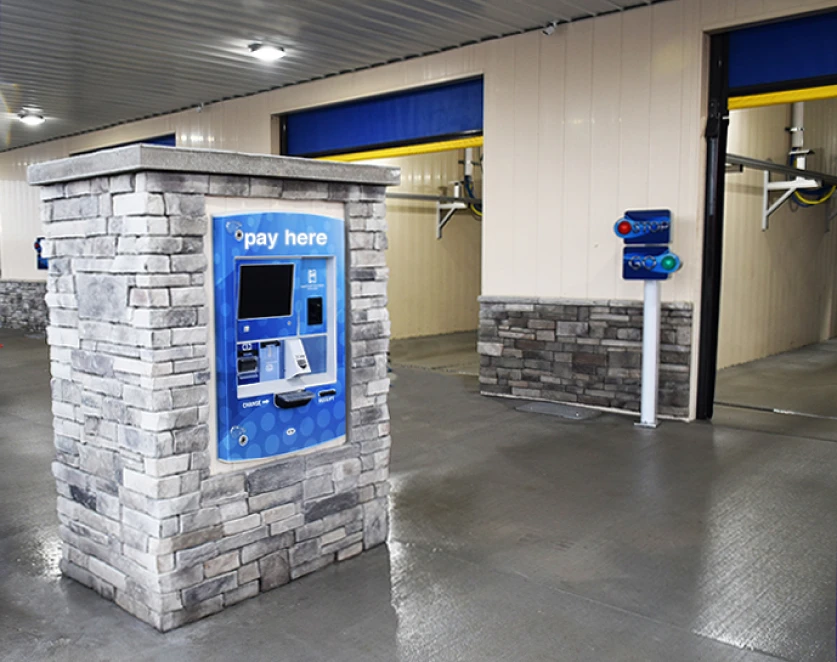
Modern payment entry stations let customers pay with a tap of a card or phone. That means faster transactions, fewer abandoned washes, and easier up sells at the pay station. If your site runs on cash- and coin-only equipment, a retrofit can add contactless acceptance without replacing the whole pay station.
The Bottom Line
An in-bay automatic can be very profitable when it’s in a good spot, priced in tiers, kept running, and set up for the way people pay today. If you’re leaving revenue behind at the pay station, that’s often the fastest fix.