
IQ MAX Automated Truck Wash: Calculate Fleet Washing ROI
For a fleet, the cost of washing a truck goes beyond soap and water. Labor, trips to an off-site wash, vehicle downtime, utilities and maintenance all affect the total. An in-house automated truck wash can improve that equation, but the result depends on your vehicle mix and how often you wash.
The IQ MAX touch-free large vehicle wash system uses 3D vehicle scanning to tailor each wash to the vehicle’s dimensions. Here’s how to compare it with your current process and identify the numbers that matter most.
What drives fleet washing cost per vehicle?
Start with the actual cost of your current wash process, not just the price on a service invoice. For manual or outsourced washing, include:
- Labor: Employee time spent washing, driving, waiting and managing the wash process.
- Downtime: Time a truck or bus is unavailable for its usual work.
- Wash expenses: Outsourced fees, water, electricity, chemicals and other consumables.
- Consistency: Rework when vehicles need another pass or difficult areas are missed.
Then compare those figures with an on-site system’s oversight labor, utilities, chemicals, maintenance and installed equipment cost. The more vehicles you wash each month, the more washes over which you can spread a fixed investment.
How does IQ MAX change labor, downtime and cleaning?
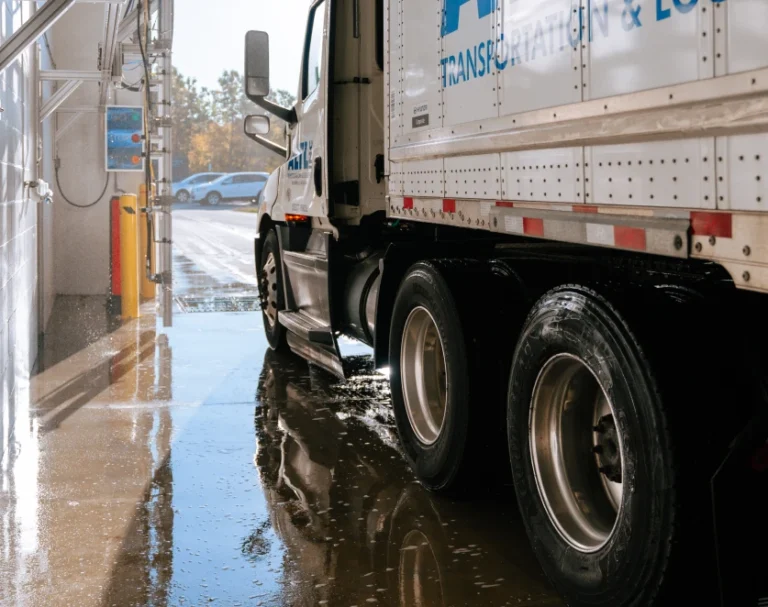
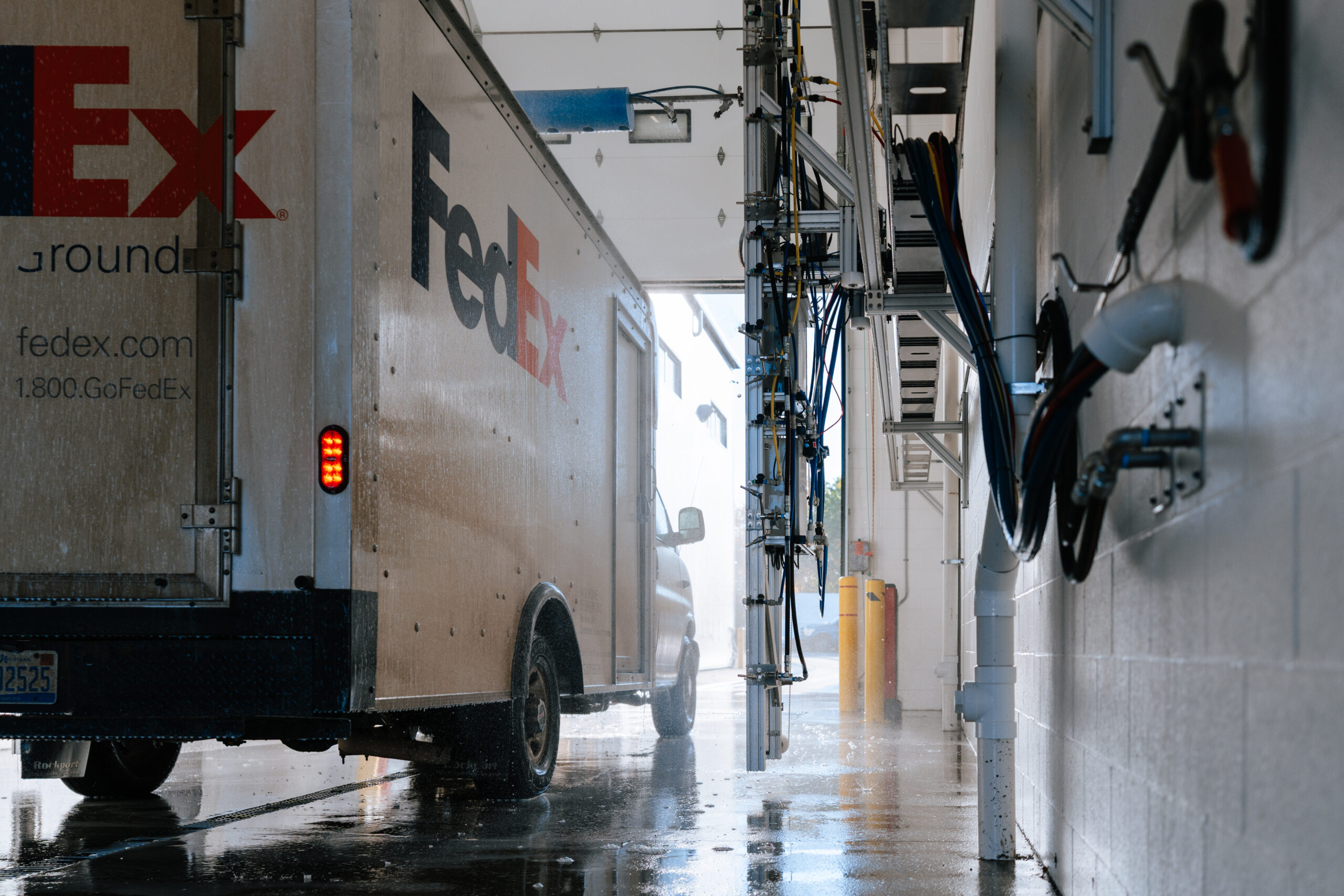
The IQ MAX is an automated, touch-free system designed for large vehicles. Its light-grid and 3D scanning technology profiles each vehicle and guides nozzle movement around its shape. This helps the system reach areas such as roofs, mirrors, ladders and stacks while reducing contact-related damage risk.
The published IQ MAX article describes wash cycles of 10–20 minutes. Actual time will depend on the vehicle and wash program. Bringing washing on-site can also remove travel and queue time associated with an off-site facility. D&S describes the system as requiring one operator for oversight, rather than a full manual washing crew.
Its all-electric design uses variable-frequency-drive motor control, and its remote monitoring tools provide access to wash counts, settings and service information. These features matter when you’re assessing bay availability, staffing and long-term operating cost—not only cleaning speed.
Which vehicles and sites can IQ MAX accommodate?
IQ MAX is designed for mixed large-vehicle fleets, including vans, work trucks, school buses and tractor-trailers. Published product specifications list an optimal operating height of 13 ft 6 in, a maximum vehicle height of 14 ft, and a maximum vehicle width of 10 ft. At the maximum height, the top wand operates slightly outside its optimal range.
Before estimating throughput or payback, check your bay dimensions, vehicle accessories and utility capacity against the IQ MAX specifications. A D&S specialist can help determine the right configuration for your fleet and site.
How to calculate automated truck wash ROI
Use your own numbers for a comparison you can defend:
- Calculate current annual wash expense. Add outsourced wash fees or manual-wash labor, travel and waiting time, supplies, utilities, and any measurable vehicle downtime.
- Estimate IQ MAX annual operating expense. Include oversight labor, water, chemicals, power, maintenance and remaining vehicle downtime. Get site-specific estimates rather than applying a generic cost-per-wash figure.
- Find annual operating savings. Subtract the IQ MAX annual operating expense from your current annual wash expense.
- Estimate simple payback. Divide the total installed equipment cost by annual operating savings, if savings are positive. This is a screening estimate; financing, taxes and future cost changes require a fuller analysis.
For a fully loaded cost per wash, also allocate the equipment investment over its useful life and divide total annual costs by expected annual wash volume. If you operate a paid truck-wash bay, model revenue per wash and bay utilization separately from fleet cost savings.
Can IQ MAX support a commercial wash bay?
For operators serving outside fleets or retail customers, the same automated wash can be paired with RFID access and WashCard payment options. In that case, profitability depends on local demand, pricing, washes per day and operating cost—not just wash-cycle speed. The IQ MAX product page is the best next step for equipment options and a site-specific quote.
IQ MAX fleet washing questions
How long does an IQ MAX wash take?
The published D&S article cites 10–20 minutes per cycle. Ask for timing based on your vehicle types, soil levels and wash settings when comparing it with your current process.
Does IQ MAX work for mixed fleets?
It is designed for vehicles ranging from vans and work trucks to buses and tractor-trailers. Confirm the dimensions of your tallest and widest vehicles, including mirrors and accessories, against the published specifications.
Will automated washing lower my cost per wash?
It may, especially when manual labor, off-site travel or wash-related downtime are significant. The result depends on wash volume, local labor and utility costs, maintenance, and the installed price. Use the calculation above with your own fleet data.
Ready to run the numbers? Explore IQ MAX specifications and request a site-specific quote.